

Introduction
In our previous articles, we explored how rising Use of System (UoS) charges are increasing the cost of delivering electricity across the network, as well as how geopolitical tensions in the Middle East can create uncertainty across global oil and gas markets.
Both of these issues highlight an important question for the future. As the world moves away from fossil fuels and invests heavily in renewable energy, will this create a more stable and affordable energy system?
The answer is yes, but the journey there may not be as straightforward as many expect.
Renewable Energy Has the Potential to Lower Long-Term Costs
Renewable technologies such as wind and solar offer a major advantage over traditional fossil fuels because they do not rely on a constant supply of fuel.
Once a wind farm or solar installation has been built, the cost of generating electricity is significantly lower because there is no need to purchase gas, coal, or oil to produce power.
In the long term, a system powered by more renewable energy should be less vulnerable to the types of global events that have caused major market shocks in recent years. Conflicts in energy-producing regions, supply disruptions, and fluctuations in international fuel markets should have less influence over electricity prices.
The transition is already well underway. Renewable sources now account for a significant proportion of UK electricity generation, with offshore wind becoming one of the country’s largest sources of power. As renewable capacity continues to increase, the UK’s reliance on imported fossil fuels is expected to reduce, helping improve long-term energy security and market resilience.
However, moving to this new system requires enormous investment, and this is where businesses are feeling some of the pressure today.
The Hidden Cost of Building the Energy System of Tomorrow
One of the biggest challenges of the energy transition is that the electricity network was designed around a very different model.
Historically, power was generated by a smaller number of large power stations and transported across a network built for predictable flows of electricity. Modern renewable energy systems are more complex, with generation coming from offshore wind farms, solar sites, and smaller distributed sources.
To accommodate this change, billions of pounds must be invested in new transmission infrastructure, substations, digital technologies, and smarter networks.
National Grid and network operators are investing heavily in upgrades and reinforcement projects designed to support the UK’s net-zero ambitions and connect increasing volumes of renewable generation to the grid. While these investments are essential for future energy security, many of the associated costs are ultimately recovered through network charges that businesses contribute towards.
As discussed in our previous article on UoS increases, businesses are already seeing how network upgrades and maintenance costs can contribute to higher charges on their energy bills.
This means that while renewable energy may reduce costs in the future, the transition itself requires significant spending today.
Why Gas Still Plays a Major Role in Electricity Prices
Many businesses assume that because renewable energy generation is increasing, their electricity prices should immediately fall.
The reality is more complicated.
Renewable energy depends on weather conditions. A windy day may produce large amounts of cheap electricity, but periods of low wind and high demand still require alternative sources of generation.
At present, natural gas remains one of the most important technologies used to provide reliable backup power.
This means events happening thousands of miles away can still impact the cost of electricity in the UK. As we discussed in our previous article on the Middle East conflict, instability in major energy-producing regions can influence global gas and oil markets, which can then filter through to businesses’ energy costs.
The impact of gas markets was demonstrated during the energy crisis of 2022, when wholesale gas prices reached record highs and drove significant increases in electricity costs across Europe. Although market conditions have since stabilised, gas remains a key factor in determining wholesale electricity prices.
The energy transition is reducing this dependence, but it has not eliminated it yet.
New Energy Security Challenges Are Emerging
The traditional energy market focused heavily on securing supplies of oil and gas.
The energy system of the future will face different challenges.
The rapid growth of batteries, electric vehicles, and renewable technologies has increased demand for critical materials such as lithium, nickel, and rare earth elements. Supply chain disruptions or shortages could impact the cost and speed of developing new energy infrastructure.
There is also the challenge of financing the transition. Large-scale renewable projects, battery storage facilities, and network upgrades require substantial investment, meaning economic factors such as inflation and interest rates can influence the pace and cost of change.
While the future energy system may be less dependent on fossil fuels, it will still require careful management of supply chains, infrastructure investment, and technological development to maintain security and affordability.
Expert Insight
The transition to renewable energy is likely to improve long-term market stability, but businesses should not assume volatility will disappear overnight.
Over the next decade, energy prices are likely to continue being influenced by infrastructure investment, global commodity markets, changing regulatory frameworks, and evolving technologies. Businesses that regularly review their energy strategy and monitor market developments are often better positioned than those that only engage with the market when contracts expire.
What Businesses Should Be Doing Now
While no business can control wholesale markets or global events, there are practical steps that can help reduce exposure to future volatility:
- Review contract renewal dates well in advance.
- Monitor market trends before entering fixed-term agreements.
- Consider flexible purchasing strategies where appropriate.
- Assess opportunities for energy efficiency improvements or on-site generation.
- Understand the impact of non-commodity costs such as network and policy charges.
- Seek independent advice when market conditions are changing rapidly.
Businesses that actively manage their energy procurement strategy are often better positioned to respond when market conditions shift.
A More Stable Future, But a Challenging Transition
The move towards renewable energy has the potential to create a cleaner, more secure, and more stable energy system.
However, businesses should recognise that the transition period may continue to bring volatility. While renewable generation grows, companies are likely to experience a market shaped by global events, ongoing network investment, changing technologies, and the continued influence of gas prices.
The lessons from recent years are clear. Energy costs are no longer driven by a single factor. A conflict overseas can affect fuel markets, a national infrastructure upgrade can increase network charges, and the global transition to clean energy can create both opportunities and challenges.
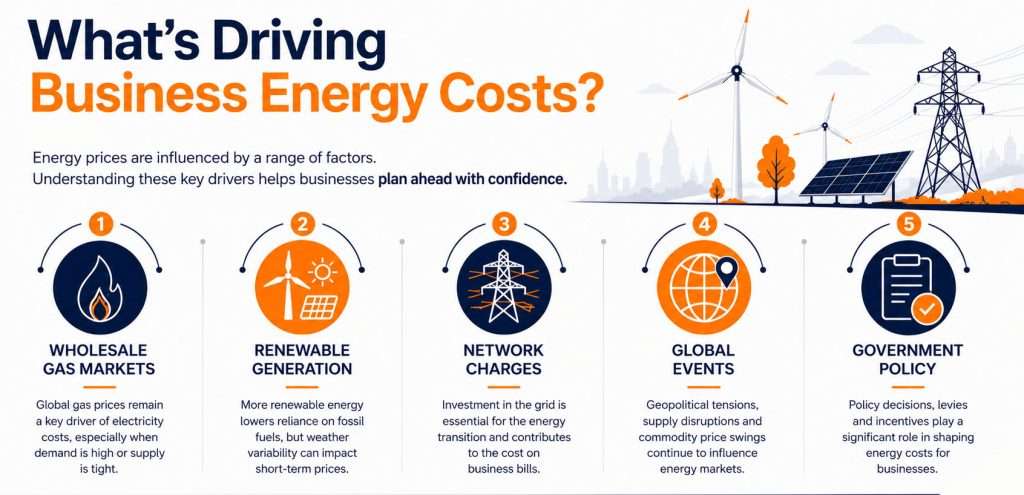
Understanding energy markets has become increasingly complex. Wholesale prices, network charges, government policy, global events and the transition to renewable energy all influence the costs businesses ultimately pay.
At Volt Solutions, we help organisations navigate these changing market conditions, identify opportunities to reduce costs, and develop procurement strategies aligned to their operational goals.
If your energy contract is approaching renewal, or you would like an independent review of your current energy arrangements, contact Volt Solutions for a no-obligation discussion and discover how a proactive energy strategy can help protect your business from future market uncertainty.